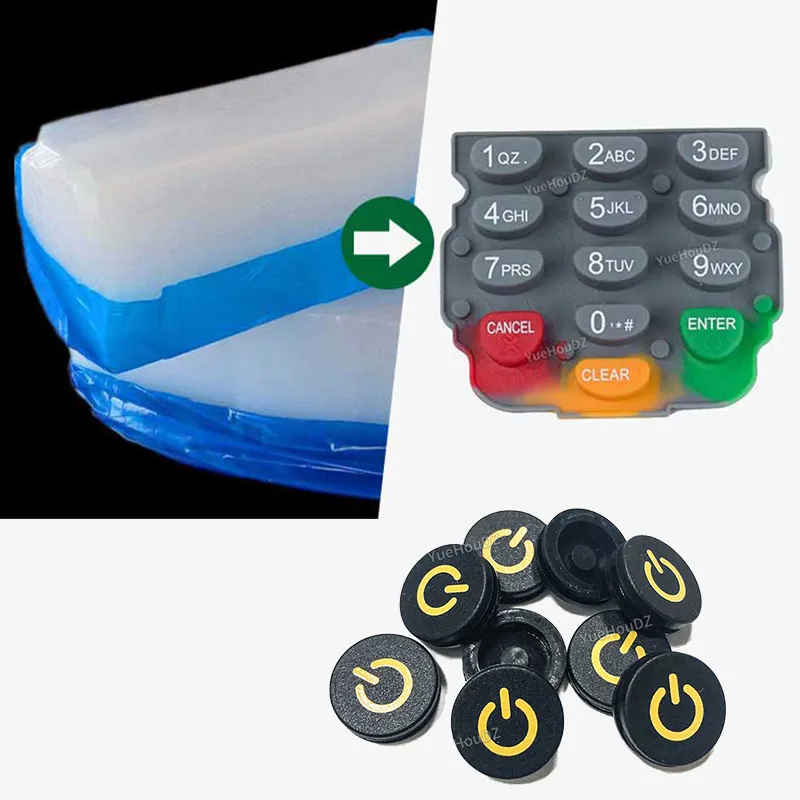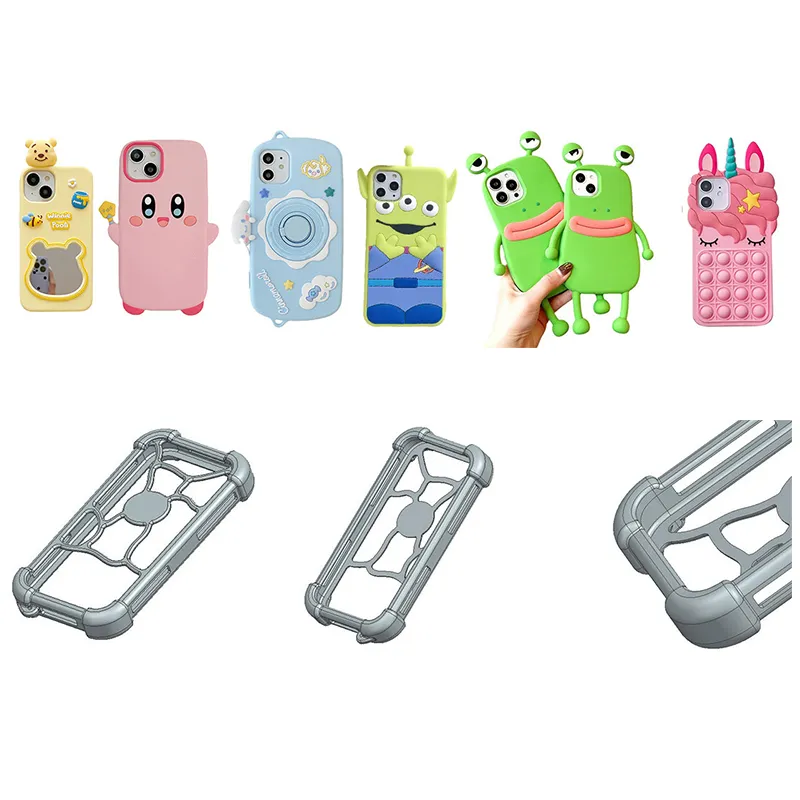

In the process of docking between enterprises and customers, problems such as vague demand descriptions, inconsistent communication standards, and lengthy decision-making processes often lead to low efficiency and even subsequent rework. Combining technically verified details and methods from practice, this article introduces a set of implementable customer docking skills from three dimensions: demand quantification, communication standardization, and decision-making process optimization. These skills help reduce troubles caused by information deviations and decision-making delays. This content is compiled from the practical experience of YueHouDZ Silicone Products Factory in customer docking, for reference by practitioners.
Demand Clarification: Transforming Vague Demands into Quantifiable Standards
The primary difficulty in customer docking lies in vague demands. Descriptions such as “soft hand feel” and “environmentally friendly materials” often lead to subsequent deviations due to cognitive differences. In actual projects, manufacturing customers often experience sample rework due to the vague definition of “environmentally friendly materials. Some customers believe that “environmental protection” requires only compliance with Chinese standards, while others insist on EU standards. The core to solving this problem is to convert abstract descriptions into quantifiable parameters. For example, in the manufacturing industry, when a silicone products factory docks with kitchenware brand customers, it clarifies “soft hand feel” into specific hardness values (e.g., Shore A 60±5) and attaches hand feel sample images, and corresponds “environmentally friendly materials” to specific compliance requirements such as FDA food contact standards or LFGB EU food-grade certifications. To further eliminate cognitive deviations, standardized color cards (e.g., Pantone color numbers) and hardness sample books can be provided to customers in advance. Physical references help customers establish a unified cognitive benchmark and avoid communication costs caused by “discrepancies between verbal descriptions and actual samples.”
Communication Standardization: Reducing Information Deviations through Documentation and Physical Tools
“Distortion” in information transmission is another major cause of low efficiency in customer docking, which requires the establishment of a standardized communication mechanism from both documentation and physical aspects.
At the documentation level, a “document format guide” can be prepared and sent to customers in advance, specifying the format of demand documents (e.g., CAD drawings must be version 2018 or above, images must be in CMYK mode) and version requirements. An electronics enterprise encountered repeated verification of structural dimensions due to incompatibility between the customer-provided CAD drawings in version 2010 and the internal design software when docking with precision component procurement requirements. Later, by sending the format guide in advance, the number of drawing adaptation issues was reduced by 70%.
At the physical level, for demands involving appearance and touch (e.g., color, hardness), standardized color cards and hardness sample books can be sent to important customers in advance as a “common language” for subsequent communication. In the packaging and printing docking in the FMCG industry, when a customer mentions “the red color of the last sample,” it can be directly corresponding to the color card number (e.g., Pantone 185C), avoiding subjective disputes over “too dark/too light.” In the mold processing docking in the manufacturing industry, letting customers touch and confirm with a hardness sample book (e.g., silicone samples in the Shore A 50-80 range) is more accurate than the verbal description of “medium hardness.”
Decision-Making Process Optimization: From Information Classification to Providing Simplified Decision-Making Solutions
Slow decision-making often stems from information overload or vague options, which requires shortening the decision-making chain through structured methods.
Firstly, it is necessary to clearly distinguish between “matters requiring decision-making” and “reference information” in communication. For example, when an auto parts supplier docks with an OEM (Original Equipment Manufacturer) for demands, it marks “Confirmation required this week: material certification report/mold opening time” with a bold title in the email. It presents “prices of similar products in the market (for reference only)” as an attachment, preventing customers from wasting energy on irrelevant information.
Secondly, provide specific decision-making suggestions rather than open-ended questions. In the customization of silicone products in the manufacturing industry, a customer was hesitant between cost and delivery time. Instead of asking “Which solution do you think is better?”, it is better to explain: “Based on your quarterly promotion demand (100,000-unit order), Solution A (unit price of $0.4 per piece, delivery time of 45 days) and Solution B (unit price of $0.46 per piece, delivery time of 20 days) are more suitable. It is recommended to prioritize Solution B to ensure delivery before the promotion starts.” (Note: RMB to USD conversion is based on an exchange rate of 7:1)
In addition, designing simplified decision-making templates (e.g., checkbox forms) can improve efficiency. In the packaging design docking in the FMCG industry, a form is used to list options such as “material (PET/PP), size (10cm×15cm/12cm×18cm), printing process (silk screen/gilding)”. Customers can check options directly, saving 50% of communication time compared to open-ended responses. Understanding the customer’s internal decision-making chain in advance (e.g., “the technical department needs to confirm parameters before the procurement department approves”) allows for simultaneous copying of key roles in emails, avoiding information transmission gaps.
Adaptation Suggestions for Different Scenarios
The implementation of skills needs to be adjusted in accordance with customer types and cooperation stages:
- Customer scale: When docking with large enterprises, more attention should be paid to document standardization (e.g., providing third-party testing reports) and process adaptation (submitting demand forms in the format of their ERP system). Small and medium-sized enterprises focus more on flexibility so that document requirements can be simplified and core requirements can be quickly confirmed via phone calls and short emails.
- Cooperation stage: For initial cooperation, it is recommended to use a full set of standardized tools (format guides, sample books, decision-making templates) to establish a cognitive benchmark. For long-term cooperation, key links (e.g., checking color and hardness with sample books) can be retained, and repetitive processes can be simplified (e.g., defaulting to using historical document formats).
Conclusion
The improvement of customer docking efficiency essentially lies in building a “low-friction” collaboration model through “demand quantification, communication standardization, and decision-making process optimization”. By converting vague demands into quantifiable parameters (e.g., hardness values, compliance standards), unifying communication standards with document guides and physical tools, and simplifying the decision-making chain through structured methods, information deviations and decision-making delays can be effectively reduced.