A perfect silicone handle grip sleeve is not only about anti-slip performance—it’s a balance of tactile comfort and long-term durability. YueHouDZ summarizes years of frontline custom manufacturing experience and distills it into a practical guide, covering everything from key design parameters to risk mitigation in production. Whether you’re chasing an ultra-comfortable grip feel or trying to solve common industry pain points like dust attraction, stickiness, or loosening, you’ll find the answers you need here.
Common Structural Types of Silicone Handle Grip Sleeves
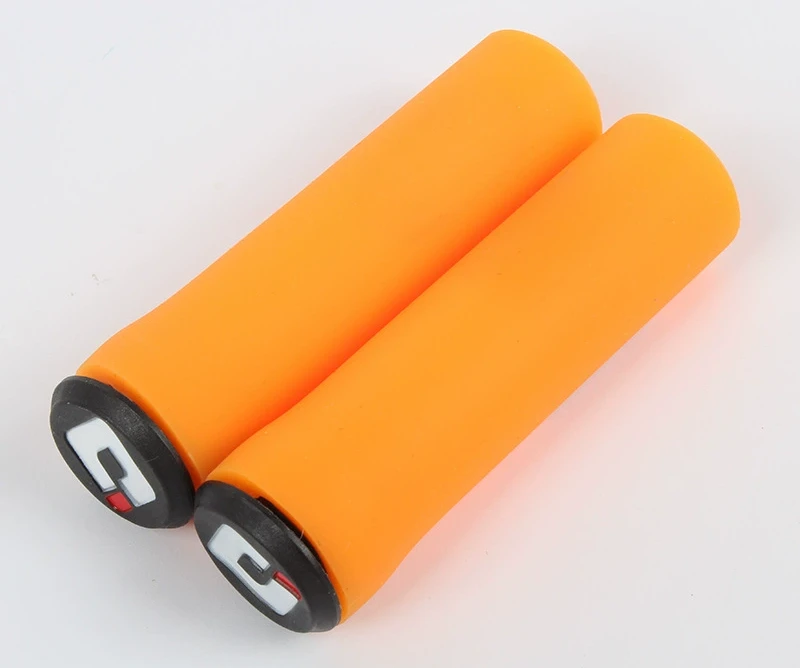
Standard Straight Grip
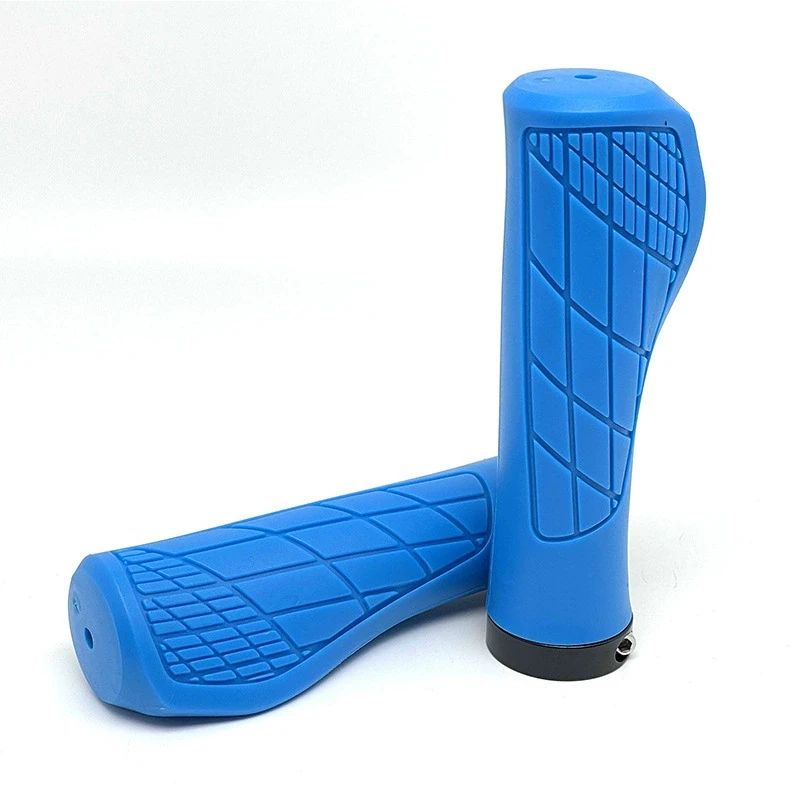
Ergonomic Grip (Palm Support / Contoured)
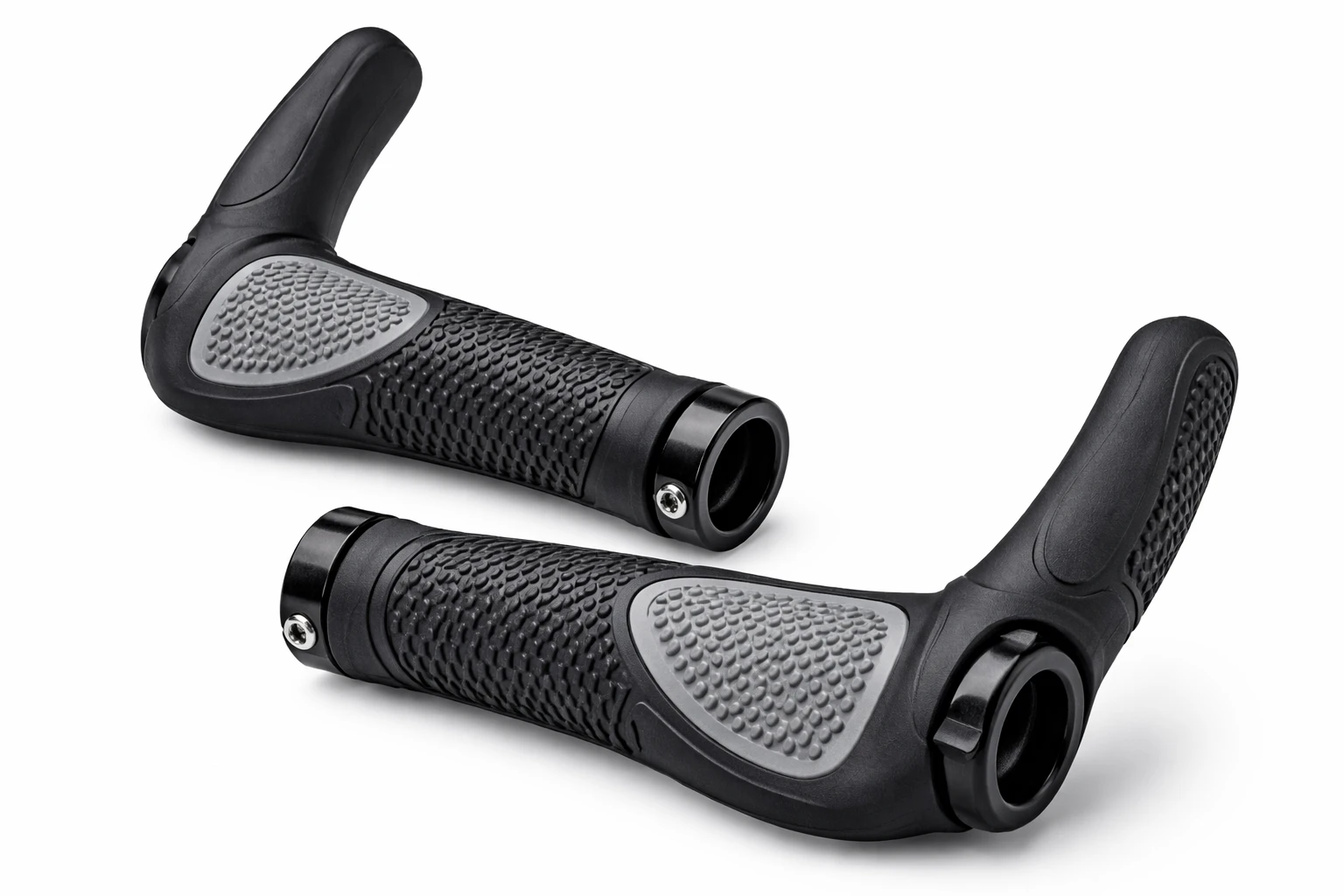
Grip with Auxiliary Handle (Wing / Bar-End)
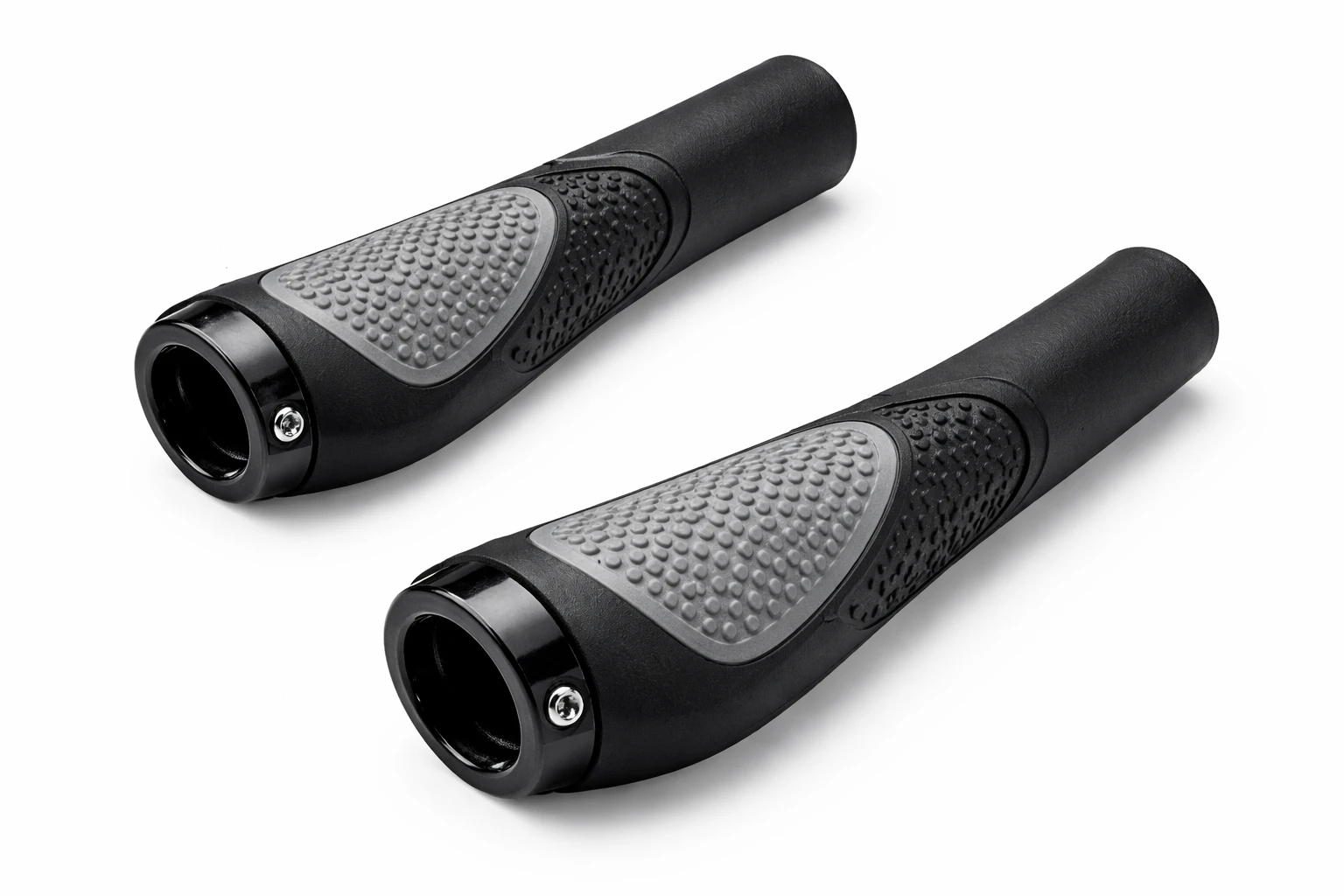
Tapered Grip (Thin-to-Thick / Thick-to-Thin)
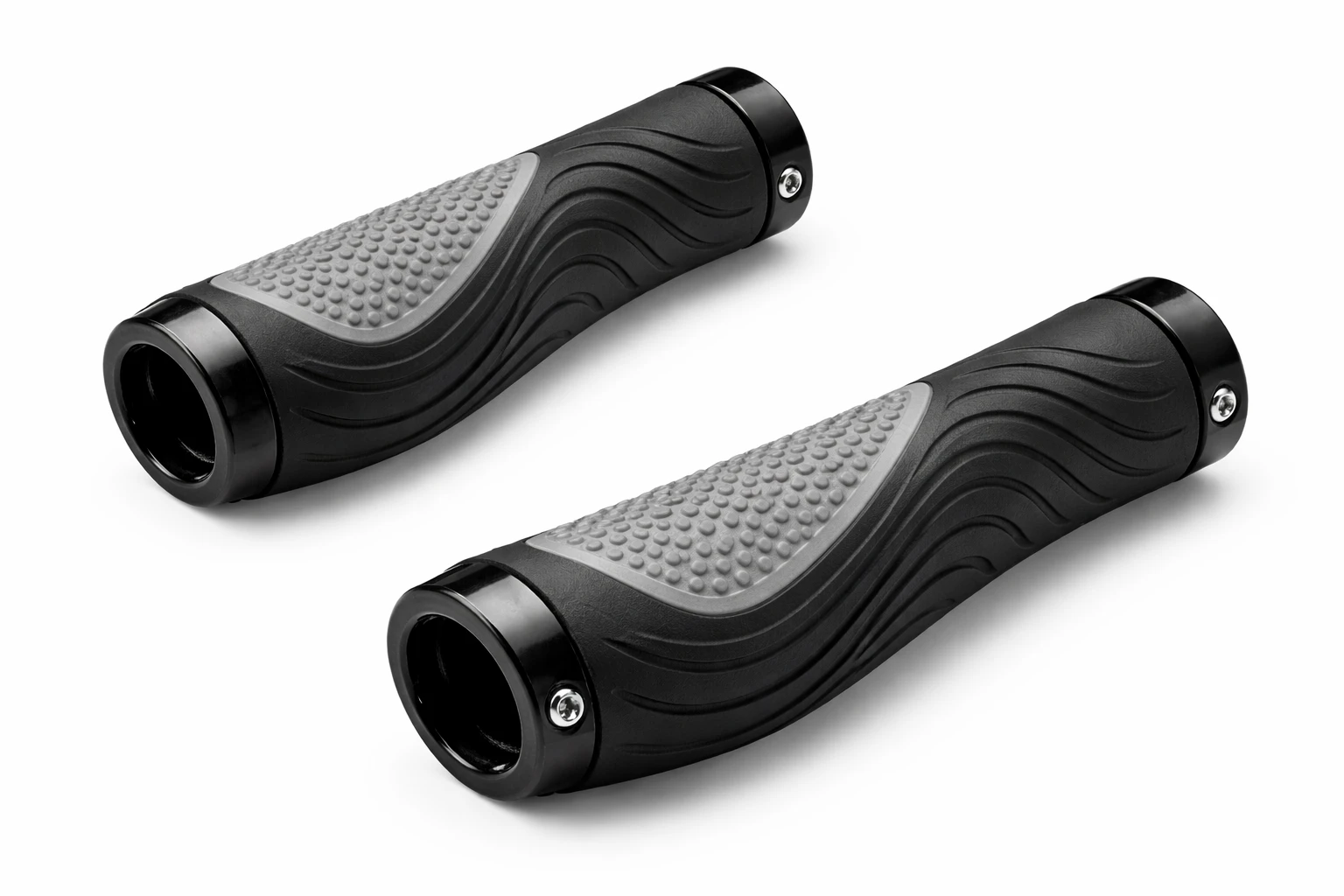
Wave-Pattern Grip
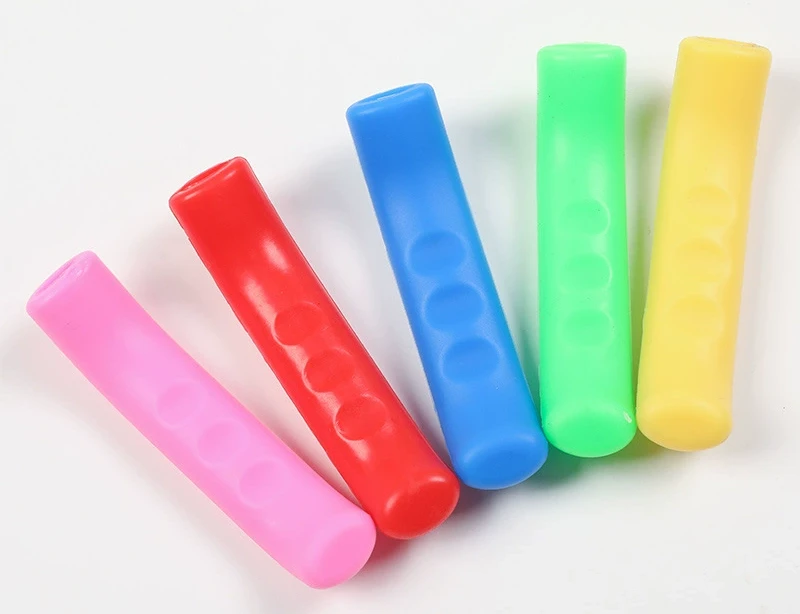
Finger-Groove Grip
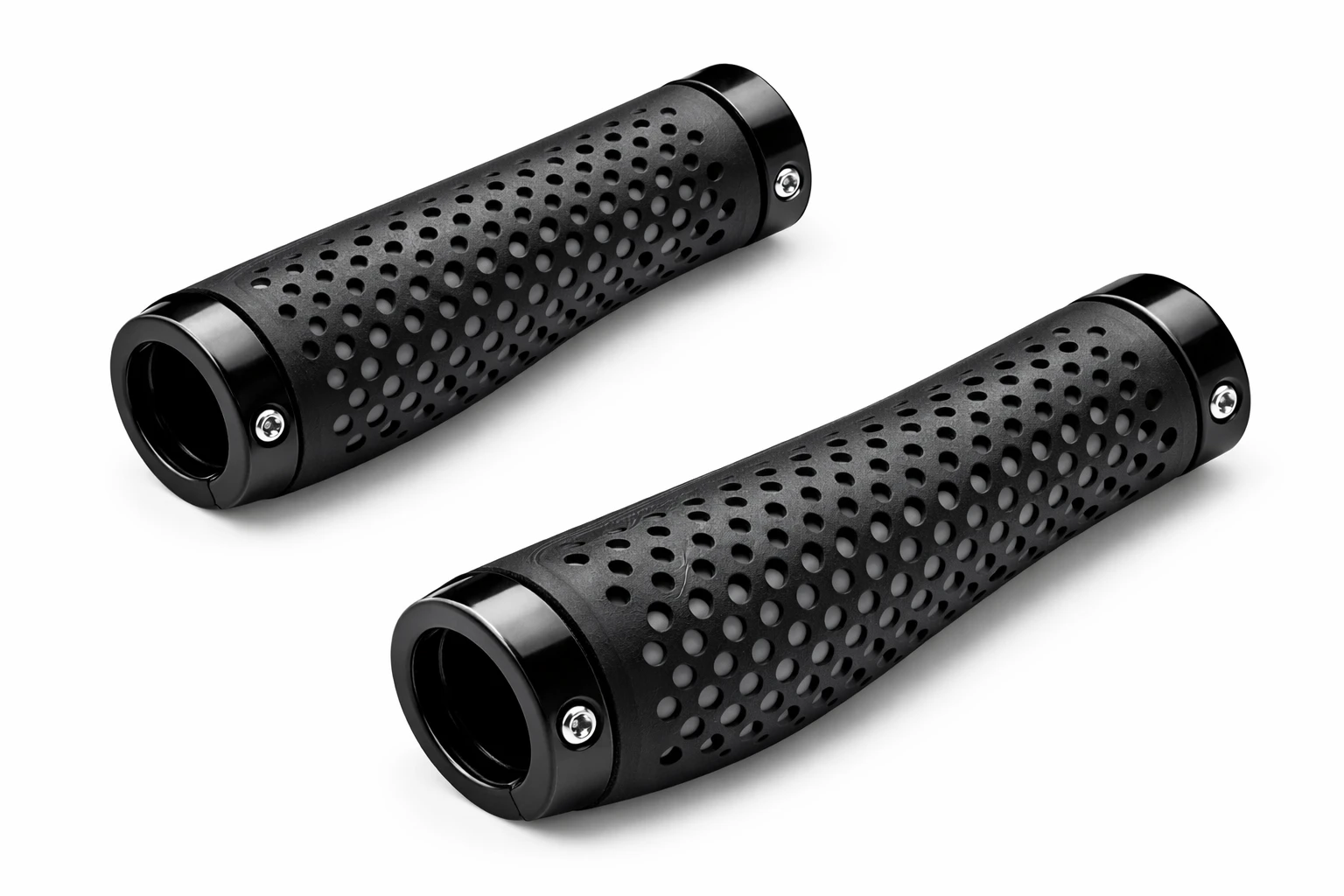
Ventilated Grip (Breathable Holes)
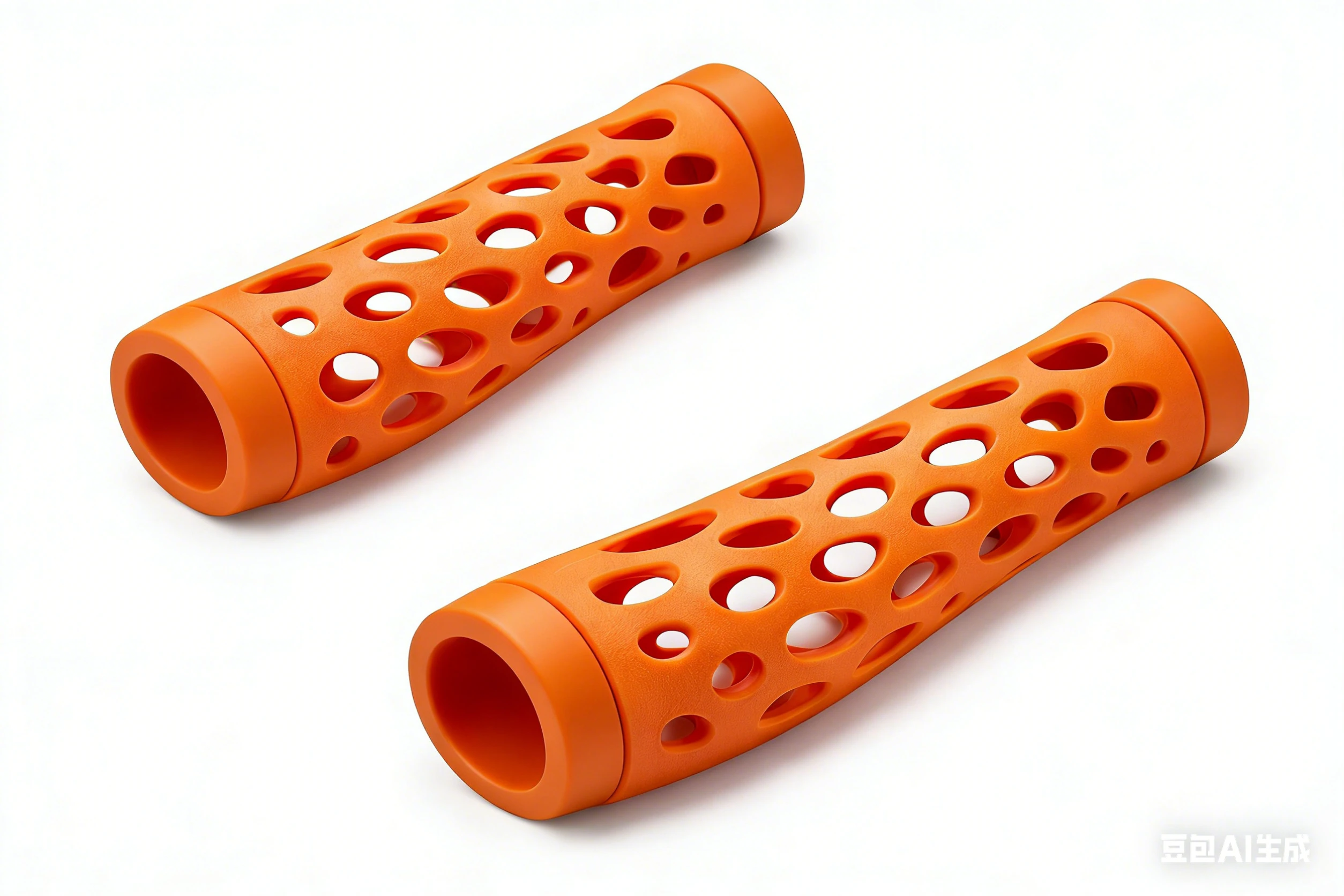
Cutout Lightweight Grip (Weight-Reduced)
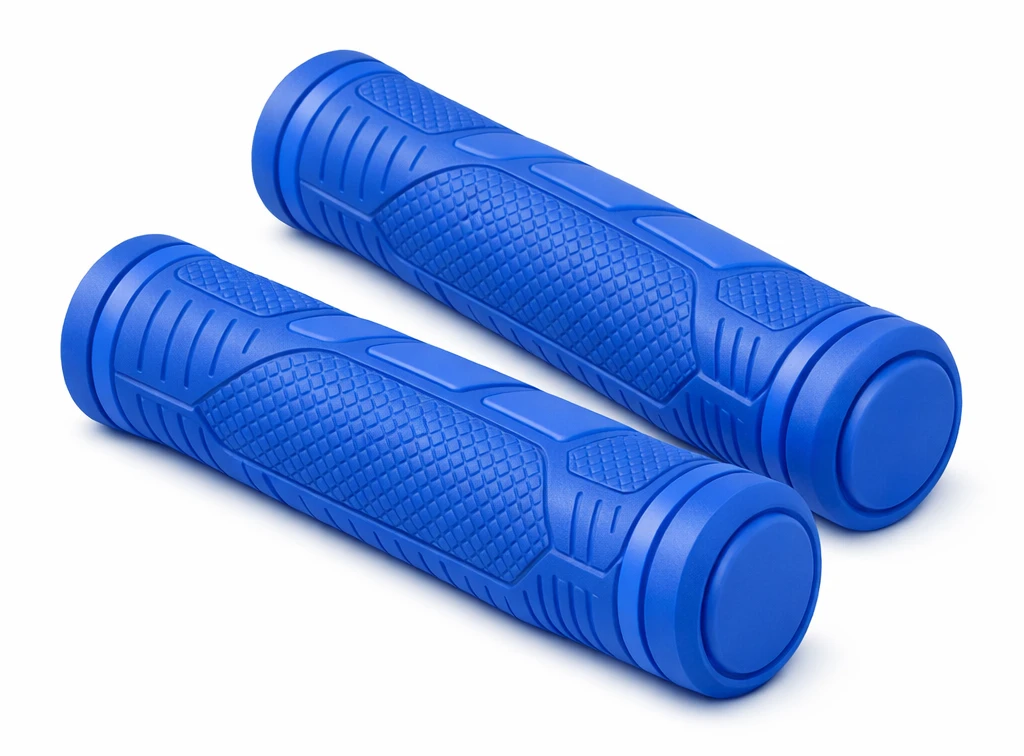
Thickened Shock-Absorbing Grip
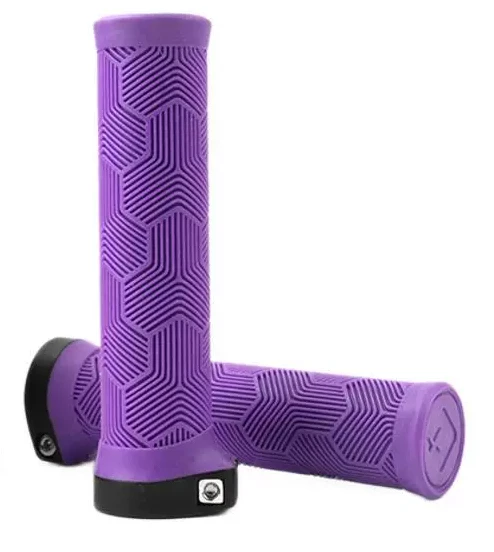
Ultra-Thin Lightweight Grip
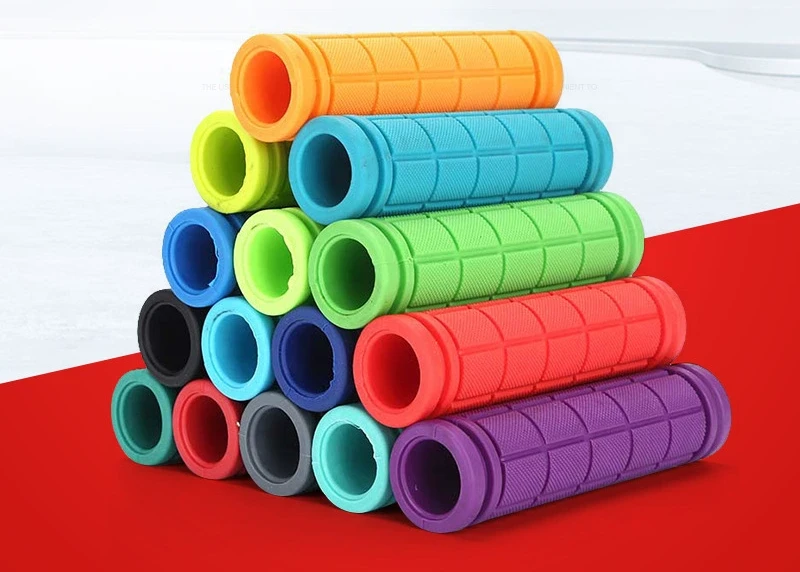
Anti-Slip Textured Grip (Diamond / Grid, etc.)
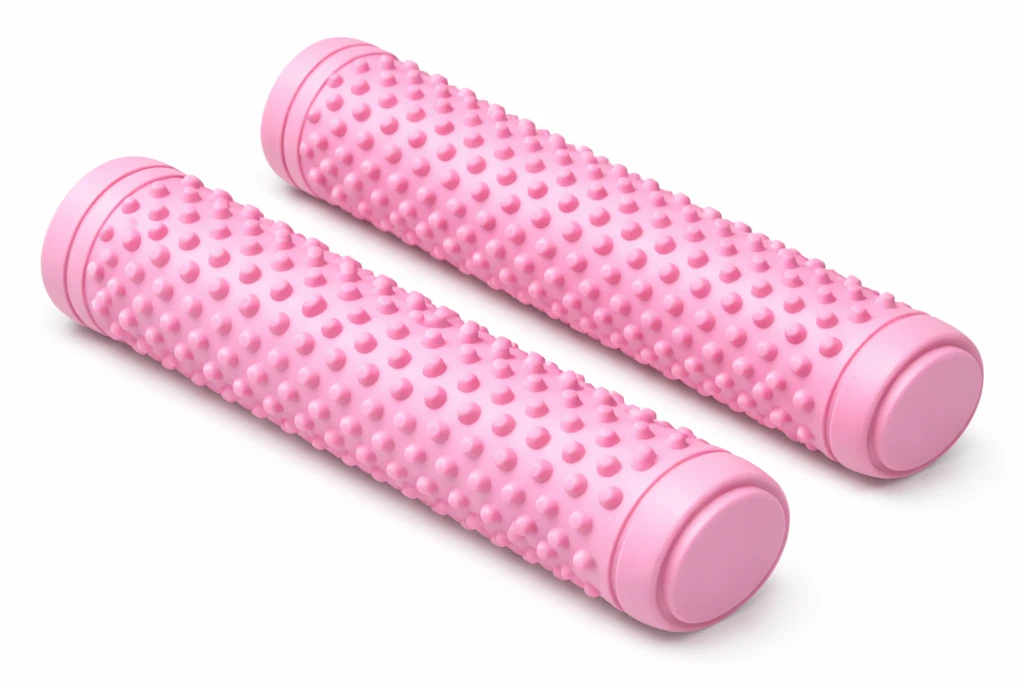
Massage Nubs Grip (Raised Dots)
What Silicone Handle Grip Sleeves Do
- Anti-slip and stable grip (more obvious with wet hands/sweating / rainy conditions)
- Improved holding comfort (softer, better hand fit, pressure reduction)
- Cushioning and vibration damping (reduced vibration for power tools and fitness equipment)
- Thermal insulation and burn protection (high-temperature scenarios such as cookware handles and spatula handles)
- Cold protection (metal handles feel less icy in winter)
- Protects the original handle (anti-scratch, anti-wear, longer service life)
- Reduces palm friction and calluses (fitness use / long-duration gripping)
- Lower grip-force requirement (more friendly for users with weak hand strength / joint discomfort)
- Improved safety (reduces slipping, dropping, and risks of cuts/impacts)
- Easy to clean, durable, stain-resistant (washable, oil-resistant, aging-resistant)
- Compliance / eco-friendly and low-odor (for export markets and low-odor / VOC requirements)
- Appearance and identification (color coding for equipment, brand recognition, personalization)
Key Performance Metrics for Silicone Handle Grip Sleeve Materials
| Core Performance Metric | Recommended Range | What Problem It Solves |
|---|---|---|
| Hardness (Shore A) | 40–60A (common: 50±5A) | Controls feel and support: too soft collapses / slips; too hard feels poor and provides insufficient conformal grip |
| Anti-slip Performance (dry/wet grip) | Static coefficient of friction: ≥0.8 (wet hands / sweating is more critical) | Prevents slipping with sweat, rain, or wet hands; reduces the risk of losing grip |
| Tear Strength | ≥20–25 kN/m (higher for heavy-load applications) | Openings and thin edges resist tearing; avoids “tears with one pull” failures |
| Tensile Strength | ≥6–7 MPa | Resists cracking/breaking under sleeve installation stretch and torsional gripping loads |
| Elongation at Break | ≥300% | Provides installation stretch margin; improves durability and reduces fatigue cracking |
| Compression Set | ≤25–30% (70°C × 22 h) | Maintains rebound over long-term gripping; avoids collapse and loosening |
| Service Temperature Range | -40°C to 200°C (cookware can use higher-temperature formulations) | No softening/deformation/odor at high temperature; no hardening/brittle cracking at low temperature |
Common Application Areas for Silicone Handle Grip Sleeves
- Kitchen utensil handle sleeves (pot handles, spatulas, ladles, etc.)
- Small appliance handle sleeves (e.g., coffee machine handles)
- Gardening tool handle sleeves (pruners, garden shears, shovel handles, etc.)
- Power tool / industrial tool handle sleeves (drills, saws, handheld tool grips, etc.)
- Sports & fitness equipment grips (dumbbells, barbell grip zones, machine handles, etc.)
- Bicycle handle grips (handlebar grips, slip-on grip covers)
- Medical / care device grips (rehabilitation equipment, care tool handles, etc.)
What to Prepare Before Customizing Silicone Handle Grip Sleeves
| What You Need to Prepare | What Problem It Solves |
|---|---|
| Handle substrate (material/surface condition / whether there is coating) | Determines whether surface treatment is needed; evaluates slipping/loosening risk; confirms suitability for slip-on sleeve or overmolding |
| Critical dimensions (OD/cross-section shape/length/tolerances) | Ensures proper fit without looseness; avoids rework and repeated mold modifications |
| Assembly method (slip-on/split/opening type / snap-fit / inner anti-slip ribs) | Prevents pull-off and rotation; defines structure and mold solution |
| Material requirements (hardness / food-grade or not / low odor) | Controls hand-feel and durability; meets regulations and customer standards |
| Use environment (temperature / oil & sweat / cleaners / outdoor weathering) | Selects the right formulation and post-processing to prevent cracking, tackiness, and aging |
| Surface texture (outer anti-slip / inner positioning texture) | Improves anti-slip performance; improves assembly stability; reduces slip under sweat/wet conditions |
| Appearance requirements (Pantone color/matte or glossy/parting line expectations) | Controls color tolerance and visual defect expectations; avoids acceptance disputes |
| Logo/markings (raised/recessed / screen printing/laser marking) | Ensures clear, mass-producible logos; avoids unclear molding or wear-off issues |
| Quantity & lead time & acceptance criteria (sample approval / packaging / testing) | Affects cavity count and quotation; reduces lead-time and quality risks |
Design Key Points for Silicone Handle Grip Sleeves
| Design Key Point | Recommended Parameters / Practices (Reference) | What Problem It Solves |
|---|---|---|
| Define installation method first | Slip-on (from end) / split wrap-around (side opening) | Avoids mismatch: cannot install, cannot fit, or becomes loose after installation |
| Define critical dimensions clearly | Handle OD, length, end steps/protrusions, effective grip-length; specify tolerances for key dimensions | Avoids difficult assembly, dimensional rework, and repeated mold changes |
| Interference fit (anti-loosening) | Inner diameter interference: reference 0.3–0.5 mm (depends on hardness and surface) | Prevents sliding, rotation, and pull-off |
| Anti-pull-off structures | Flange/lip at opening end, end stop, end-step engagement | Solves outward slipping and end lifting |
| Anti-rotation features (inner side) | Inner ribs/stripes/nubs, axial ribs; add alignment grooves for handle bosses if needed | Solves “sleeve spinning” during use |
| Ergonomic outer diameter | Reference 32–38 mm range (depending on product and user group) | Reduces fatigue and improves stability |
| Wall thickness and hand feel | Total thickness reference 2–5 mm; thicken load zones and thin non-load zones | Balances cushioning and flexibility; avoids being too hard or too soft |
| Hardness selection | Common reference range 45–55 Shore A (sports/tools can be increased for durability) | Balances comfort, wear resistance, and assembly retention |
| Outer anti-slip texture | Dot, stripe, diamond, wave; texture depth reference 0.3–0.8 mm (deeper = harder demolding) | Prevents slipping with wet hands and sweating |
| Ventilation / sweat management | Vent holes, channel grooves, zoned textures (consider strength and cleanability) | Reduces sweat buildup and discomfort during long gripping |
| Edge radii | Round exposed edges: reference R0.5 and above | Avoids cutting hands and stress concentration cracking |
| Uniform wall thickness + ribs | Avoid abrupt thickness changes; use reinforcing ribs instead of “blind thickening” when strength is needed | Reduces sink marks, warpage, and localized cracking |
| Mass-producible logo/marking | Prefer raised/recessed text; depth reference ≥0.3 mm; process options: embossing / laser marking | Since grips are frequently rubbed, they avoid unclear logos, wear-off, and acceptance disputes |
| Anti-slip detailing | Use stripes/small dots; keep textures rounded to reduce tearing risk | Improves grip while enhancing durability |
Manufacturability Evaluation Criteria for Silicone Handle Grip Sleeves
| Situation | Why It Cannot Be Done |
|---|---|
| Cannot be installed (closed-loop sleeve, handle ends are blocked / large bosses) | No physical assembly path exists unless a side opening is used |
| Cannot be removed (inner undercuts / deep grooves / too many snap features) | Demolding will cause tearing, deformation, or surface damage |
| Too thin and too fine (ultra-thin walls, long, narrow, thin sections) | High risk of short shot, breakage, tearing; extremely low yield |
| Very soft but requires wonderful textures | Textures will not form clearly; surface may appear smeared or “mushy” |
| Overly rigid tolerance requirement (e.g., ±0.1 mm very tight) | Silicone shrinkage and batch variation make long-term stability difficult |
| Conflicting requirements (ultra-soft + high-temperature + zero odor + low deformation + very low cost) | Targets conflict; trade-offs or higher cost are unavoidable |
| Silicone sleeve with embedded metal parts | Risk of delamination, detachment, and trapped bubbles |
Common Questions About Silicone Handle Grip Sleeves
My silicone grip sleeve becomes sticky after a period of use—what should I do?
Silicone tackiness is often caused by accumulated oils/grease or material aging. Try these three approaches:
Level 1 (degreasing): Rub with toothpaste or a baking-soda paste, then rinse with clean water to remove sweat and oil residue from the surface.
Level 2 (strong cleaning): Wipe with alcohol or medicated oil. Alcohol can quickly dissolve surface-exuded residues, delivering immediate results.
Level 3 (feel restoration): After thorough cleaning and drying, apply a small amount of talcum powder (baby powder) evenly. This instantly restores a dry touch and helps reduce re-sticking.
For custom silicone grip sleeves, should I send a sample or provide a 3D file?
Option 1: Send the physical handle sample (most recommended / best for beginners). If you don’t have drawings, send the actual handle to us. YueHouDZ provides free 3D modeling to ensure the silicone sleeve fits your sample precisely.
Option 2: Provide an STP file (for professional customers). If you have a designer, please provide a 3D file in STP/STEP format. We will conduct a DFM (Design for Manufacturing) review, then proceed to tooling after confirmation.
Option 3: Upgrade based on a competitor sample (modification development). If you want to reference a competitor product and improve it, send the competitor sample. We will inherit its mature internal dimensions and redesign the external appearance to help you launch a new product faster.
Why do silicone grip sleeves attract dust and hair so easily? How can it be solved?
Silicone naturally attracts dust due to static electricity and molecular adsorption. This can be mitigated by scientifically adding an anti-static agent and a dedicated slip additive at a 2% ratio into the raw compound to reduce surface tackiness from within (use slip additive with caution if you plan screen-printed logos); and by applying a nano soft-touch coating on the surface to keep it dry, reduce hair/lint pickup, and make it easy to wipe clean over the long term.