The reliability of a silicone sealing ring often depends on its cross-sectional profile. The profile affects contact pressure, anti-extrusion performance, anti-twist stability, friction/wear, and assembly tolerance. In YueHouDZ custom sealing projects, we found that many “leak” root causes are not the material, but a mismatch between the profile and the gland/groove design, compression ratio, and operating conditions. This article compiles a quick reference of standard profiles (D-shape, X-shape/star, T-shape, triangular, trapezoidal, L-shape, wedge, stepped, etc.) to help you select the right option faster and reduce trial-and-error.
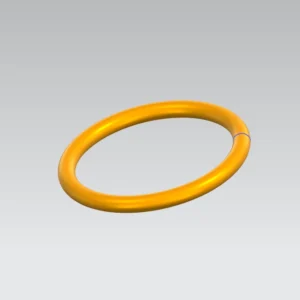
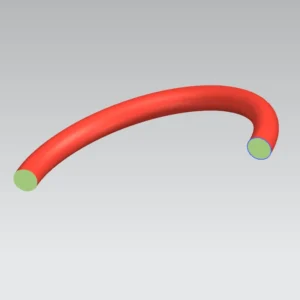
O-Ring / Round Cross-Section Silicone Sealing Ring: Pros & Cons
Key Advantages
- Highly standardized with complete size availability; low cost; easy procurement and replacement
- Mature groove (gland) design; broad coverage for static sealing applications
- Simple deformation behavior under compression, lowering design and validation effort
Main Disadvantages / Risk Points
- In dynamic conditions, rolling, twisting, or spiral failure may occur (more obvious with improper design)
- Under high pressure with large clearance gaps, extrusion can occur; anti-extrusion backup rings or structures are required
- Sensitive to compression ratio: over-compression causes compression set (permanent deformation), under-compression leads to leakage
Typical Applications
- General-purpose static sealing, controllable low-to-medium pressure sealing, and equipment requiring frequent maintenance replacement
Design / Selection Notes
- For dynamic or high-pressure applications, prioritize anti-rolling features, backup rings, or switch to a more suitable profile.
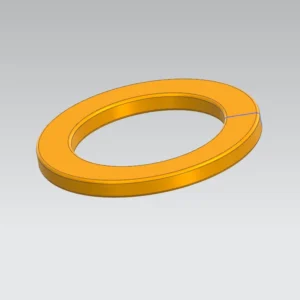
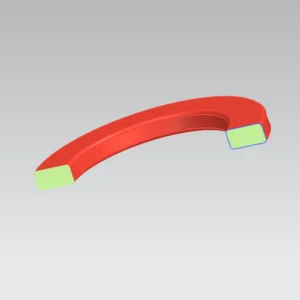
Rectangular Cross-Section Silicone Sealing Ring: Pros & Cons
Key Advantages
- Large contact area, suitable for low-pressure or “face sealing” requirements
- High groove (gland) space utilization, suitable for space-constrained sealing structures
- In static sealing, deformation after assembly is relatively straightforward to understand
Main Disadvantages / Risk Points
- Corners are prone to stress concentration; cyclic compression increases fatigue/crack risk
- More sensitive to groove machining, parallelism, and surface roughness; uneven compression can leak
- Typically higher friction in dynamic applications, increasing wear risk
Typical Applications
- Low-pressure static sealing, cover/flange face sealing, compact static structures
Design / Selection Notes
- Use chamfers/fillets to avoid sharp-corner stress concentration; be cautious in dynamic applications.
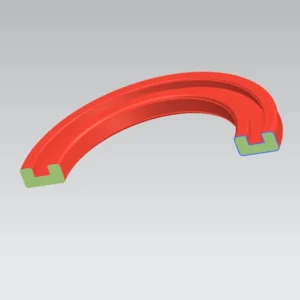
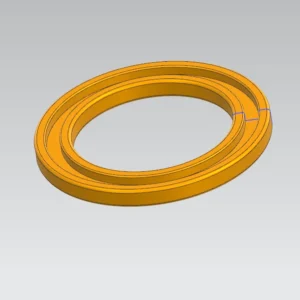
Concave Profile (Grooved / “U-Feel” Type) Silicone Sealing Ring: Pros & Cons
Key Advantages
- Can form initial sealing with lower preload; assembly feel is “softer”
- Offers some tolerance to minor surface unevenness via deformation compensation
- With proper structure, one can create a “cavity effect” where sealing improves as pressure increases
Main Disadvantages / Risk Points
- More complex cross-section; higher requirements for tooling and molding consistency
- Cavities/grooves may trap contaminants; hygienic applications must consider cleaning dead zones
- In dynamic conditions, uneven lip wear may occur, and sealing stability may degrade
Typical Applications
- Low-to-medium pressure sealing requiring low assembly force; structures with tolerance for minor surface defects
Design / Selection Notes
- For hygienic/food-grade use, evaluate cleaning paths and residue risk.
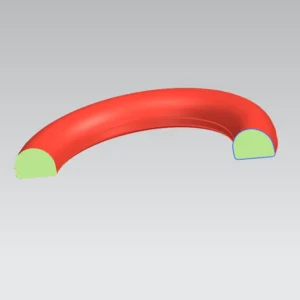
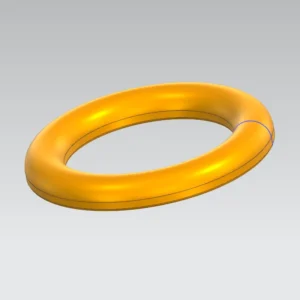
D-Shape Cross-Section Silicone Sealing Ring: Pros & Cons
Key Advantages
- Flat side seats against the groove for better anti-rolling and anti-twist performance; more stable assembly
- More controllable, uniform contact pressure distribution; improved sealing consistency
- Less likely to shift under dynamic or vibration conditions
Main Disadvantages / Risk Points
- Directional: incorrect installation orientation may affect sealing performance
- Less standardized than O-rings; sizes and replacement convenience are usually lower
- Typically higher cost than O-rings (especially for small batch/custom glands)
Typical Applications
- Vibration/dynamic sealing, pumps/valves, applications requiring stable installation or anti-rolling
Design / Selection Notes
- Define groove locating surfaces and installation orientation clearly to avoid misassembly and rework.
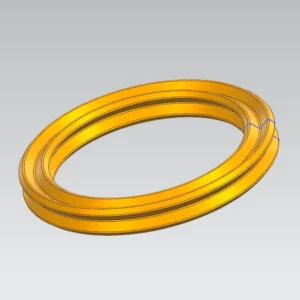
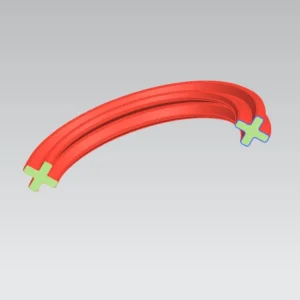
X-Shape / Star (Quad-Ring Style) Silicone Sealing Ring: Pros & Cons
Key Advantages
- Multi-lip contact provides sealing redundancy; more tolerant to pressure fluctuation
- May achieve the same sealing with lower compression, potentially reducing friction and heat generation
- Typically better anti-twist performance than O-rings; more stable dynamic sealing
Main Disadvantages / Risk Points
- More sensitive to groove design: improper dimensions/roughness can cause uneven loading and early wear
- After lip wear, performance may drop faster (especially with frequent reciprocation and poor lubrication)
- More complex structure; cost and lead time are usually higher than O-rings
Typical Applications
- Pressure fluctuation, reciprocating motion, cases aiming to reduce friction or improve sealing redundancy
Design / Selection Notes
- Groove design is critical: verify compression ratio, side clearance, surface roughness, and lubrication together.
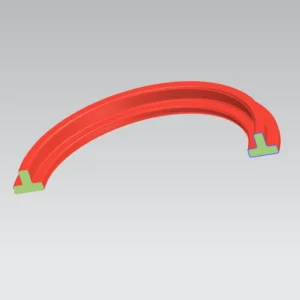
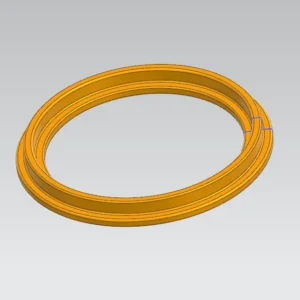
T-Shape Cross-Section Silicone Sealing Ring: Pros & Cons
Key Advantages
- Good positioning capability; sits more securely in the groove
- Can form multi-zone sealing (with appropriate design), covering a wider pressure range
- In certain flange/face seals, anti-extrusion behavior and compression distribution can be optimized more easily
Main Disadvantages / Risk Points
- Typically requires custom grooves, increasing engineering and machining cost
- Stress concentration at the T-junction; cyclic loading increases life risk
- In dynamic/rotary conditions, may distort or exhibit abnormal wear (depends on structure)
Typical Applications
- Flange sealing with custom grooves; designs requiring integrated positioning + sealing
Design / Selection Notes
- Best when the structure is designed specifically for it; not suitable as a direct O-ring replacement by force-fitting.
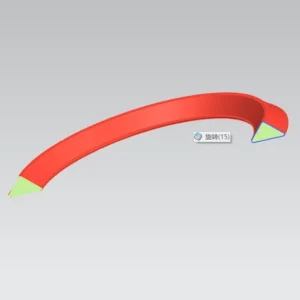
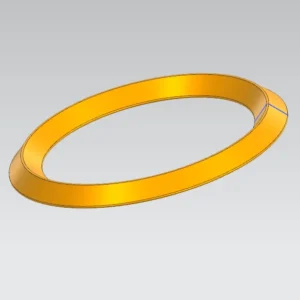
Triangular Cross-Section Silicone Sealing Ring: Pros & Cons
Key Advantages
- Three-point/multi-line contact can create higher localized contact pressure under low pressure or limited clamping force
- Provides some compensation for slightly uneven surfaces via corner deformation
- Can deliver high sealing efficiency in certain compact grooves
Main Disadvantages / Risk Points
- Obvious stress concentration at corners; cyclic compression can cause corner fatigue/cracking
- Sensitive to installation posture; poor alignment can cause tipping or shifting
- Higher risk of friction/noise in dynamic or rotary conditions; wear may accelerate
Typical Applications
- Low-pressure static sealing, limited clamping force, small structures requiring high localized contact pressure
Design / Selection Notes
- Not recommended for large vibration or high-frequency dynamics; add corner radii to reduce stress concentration.
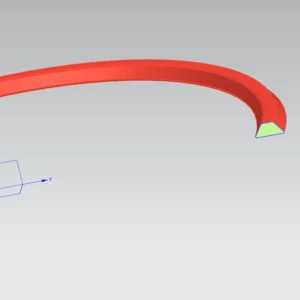
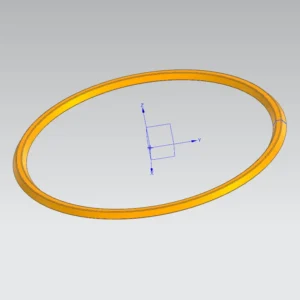
Trapezoidal Cross-Section Silicone Sealing Ring: Pros & Cons
Key Advantages
- Provides certain guiding/retention; less likely to pop out of the groove (with proper structure)
- Under pressure, may create a self-energizing contact effect; suitable for systems with significant pressure variation
- Design flexibility by tuning sidewall angles and thickness
Main Disadvantages / Risk Points
- Harder to standardize groove size/angle/compression; higher demand on machining consistency
- Poor compression control can cause under-compression leakage or over-compression compression set
- In dynamic conditions, friction rise, heat build-up, or shifting may occur
Typical Applications
- Variable-pressure conditions, grooves requiring stronger retention, customized equipment sealing
Design / Selection Notes
- Trapezoids rely heavily on gland fit; lock down angle, tolerances, and compression ratio during the drawing stage.
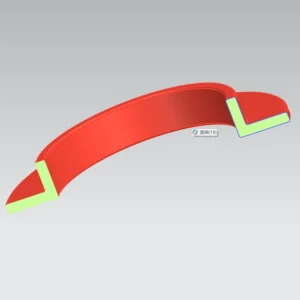
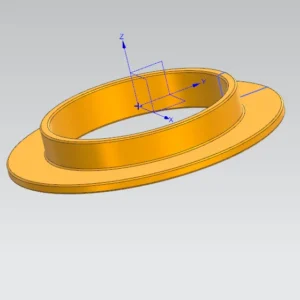
L-Shape Cross-Section Silicone Sealing Ring: Pros & Cons
Key Advantages
- Can provide both positioning and sealing; suitable for edge/flange sealing structures
- Contact area can increase with pressure, offering a self-energizing sealing characteristic
- In waterproof structures, a longer leakage path (labyrinth-like effect) can be created
Main Disadvantages / Risk Points
- More sensitive to alignment: mating surface angle/coaxiality deviations can cause leakage
- Corners and thin edges are more prone to tearing or stress concentration; dynamic life risk is higher
- Less standardized; replacement and supply-chain flexibility are usually lower than O-rings
Typical Applications
- Flange/edge sealing, waterproof structures, designs requiring integrated positioning + sealing
Design / Selection Notes
- Focus on thin-edge thickness and filleted transitions to avoid assembly scratches and corner fatigue.
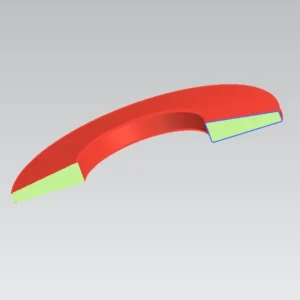
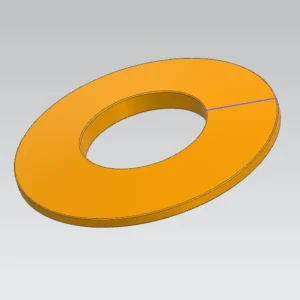
Wedge-Shaped Cross-Section Silicone Sealing Ring: Pros & Cons
Key Advantages
- Gap-filling compensation; more tolerant to minor surface irregularities
- Lower initial assembly resistance; easier to guide into position during assembly
- Self-energizing contact as pressure increases; suitable for variable-pressure scenarios
Main Disadvantages / Risk Points
- Narrow compression window: compression magnitude and direction must be controlled more precisely
- Tips/thin edges wear or damage more easily; dynamic frequent motion causes unstable life
- More sensitive to surface roughness; rough surfaces can accelerate edge wear
Typical Applications
- Structures with average sealing surface accuracy but needing deformation compensation; variable-pressure static or light dynamic sealing
Design / Selection Notes
- If lateral loads/vibration exist, validate shifting risk and retention features.
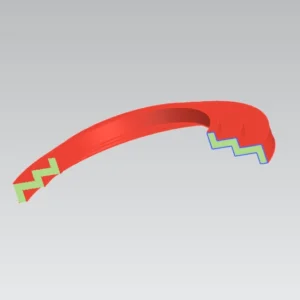
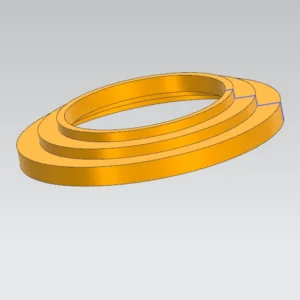
Stepped Cross-Section Silicone Sealing Ring: Pros & Cons
Key Advantages
- Enables multi-stage sealing / secondary sealing paths to improve redundancy and reliability
- Integrates multi-functions within limited space (positioning + sealing + flow guidance/barrier, etc.)
- Some tolerance to minor surface unevenness via multiple-step contacts
Main Disadvantages / Risk Points
- Complex structure: higher difficulty in tooling, molding consistency, and dimensional control
- Stress concentration at step transitions; cyclic loading increases fatigue risk
- Complex gland design; assembly is more prone to twisting or deformation and needs stricter process control
Typical Applications
- High-reliability systems, customized flange seals, vacuum or multi-stage barrier concepts
Design / Selection Notes
- Stepped profiles are suitable for engineered custom projects, not for casual substitution as a general replacement part.
FAQ: How to confirm which silicone sealing ring profile suits your product?
- Operating conditions: static or dynamic? high pressure, vibration, or frequent opening/closing?
- Structure: installation space, gland/groove dimensions, and clearance limitations?
- Environment: temperature range and media compatibility with sealing materials?
- Goal: prioritize leak prevention, anti-extrusion, wear resistance, or easy assembly?
After clarifying these conditions, match the profile’s force/deformation characteristics to the application, and you can generally determine the suitable cross-sectional profile.
FAQ: What is the high-temperature resistance of silicone sealing rings?
The high-temperature capability of silicone sealing rings is not a fixed value; it depends mainly on material type and processing:
- General silicone: typically suitable for long-term service around 120–150°C
- Fluorosilicone (FVMQ): suitable for 200–260°C high-temperature environments
- Phenyl silicone (PMQ): with specific formulations and processing, can withstand 250–300°C
In real use, long-term high-temperature performance depends not only on the silicone type, but also on the vulcanization method, whether post-curing is performed, and whether high-temperature aging tests have been passed.
Conclusion
There is no “best” cross-section—only the “most suitable.”
Selection comes down to three factors: operating conditions (static/dynamic/pressure/temperature) + gland accuracy + compression control.
- O-ring: most universal, high tolerance, low cost.
- D/T/L: more stable positioning and less rolling, but more sensitive to orientation/groove design; corners are more prone to stress concentration.
- X/star: multi-lip stability and better reliability under fluctuating pressure, but more sensitive to groove/surface; cleaning/maintenance may be more challenging.
- Trapezoidal/Wedge/Stepped: often self-energizing and more anti-extrusion, but with a narrower compression window, higher assembly consistency demands, and higher cost.
- Triangular: can achieve high contact pressure in small spaces, but overall stability is average and more likely to have issues under dynamic/vibration/large temperature swings.